Best Places to Shop in Singapore in 2026
Singapore is one of Asia’s greatest shopping destinations. Whether you’re hunting for luxury labels, local souvenirs, budget fashion, or tech gadgets, this guide covers every shopping district, mall, market, and hidden gem worth visiting in 2026.
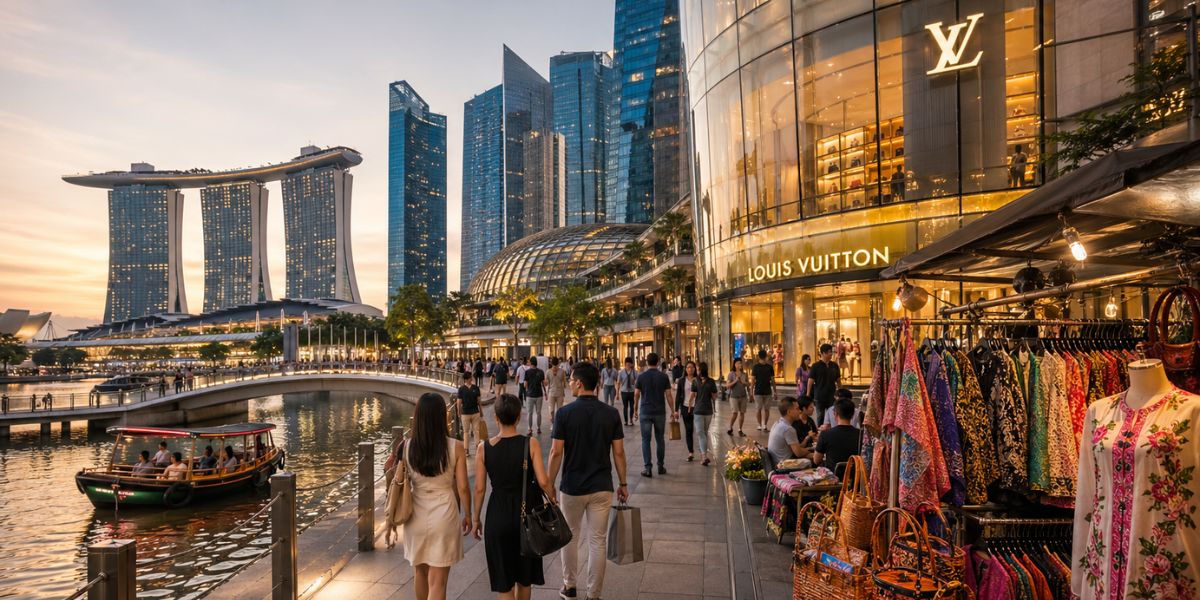
Singapore does not feel like a place where shopping is just something you do between flights. It feels like a place that was built for it — not in a commercial, soulless way, but in a way that genuinely surprises you. A Peranakan shophouse selling hand-stitched kebayas sits a five-minute walk from a Louis Vuitton flagship. A night market hawking $3 keychains backs up against a rooftop bar where cocktails cost forty dollars. That contrast is exactly what makes shopping here so addictive.
Whether you are visiting Singapore for the first time, living here and looking for spots you have overlooked, or making the most of a long layover at Changi, this guide covers every district, mall, market, and neighbourhood worth your time in 2026. No padding, no obvious filler — just honest, useful advice on where to go and why.
How Singapore’s Shopping Areas Are Laid Out
One thing that helps before you start exploring: Singapore is smaller than most people expect, and the MRT makes it genuinely easy to move between neighbourhoods without burning your day in a taxi. Most major shopping areas are within thirty to forty-five minutes of each other by train.
| Shopping Area | Best For | Price Range | Famous For | Ideal Visitors |
|---|---|---|---|---|
| Orchard Road | Luxury shopping | High | Designer brands, malls | Luxury shoppers |
| Bugis Street | Budget shopping | Low | Cheap fashion, accessories | Budget travelers |
| Haji Lane | Boutique shopping | Medium | Indie stores, unique fashion | Young travelers |
| Chinatown Street Market | Souvenirs | Low | Gifts, local products | Tourists |
| Marina Bay Sands | Premium brands | Very High | Luxury fashion | High-end shoppers |
| Mustafa Centre | 24-hour shopping | Medium | Electronics, groceries | Bargain hunters |
Broadly speaking, the city breaks down like this:
Orchard Road is the main commercial spine — big malls, international brands, department stores.
Marina Bay is where luxury retail goes to feel theatrical. Glossy, grand, and worth seeing even if you’re not buying.
Bugis and Kampong Glam (including Haji Lane) is where local designers and independent boutiques thrive. Younger, scrappier, and far more interesting if you want something that isn’t sold everywhere else.
Chinatown and Little India are where you find cultural goods, handmade crafts, textiles, spices, and souvenirs that actually mean something.
VivoCity and HarbourFront are the gateway to Sentosa — practical, well-stocked, and surprisingly enjoyable for a few hours.
Pick one area per half-day and you will not feel rushed. Try to cram all of them into a single afternoon and you will feel like you barely saw any.
Orchard Road: Still the Heart of It All
People have been predicting the decline of Orchard Road for years. It has not happened. The 2.2-kilometre stretch remains one of Southeast Asia’s most dense and well-organised shopping corridors, with more than twenty major malls lining both sides of the street. The key is knowing which ones to prioritise.
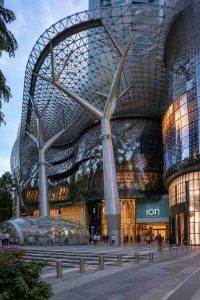
ION Orchard is the easy starting point. The building itself is worth a few minutes of admiration — the curved glass exterior and the way levels seem to spill into each other is genuinely impressive architecture. On the lower floors you get Zara, H&M, Muji, and similar high-street names.
Climb higher and the brands shift: Louis Vuitton, Prada, Chanel, and a handful of jewellery houses sit on the upper retail levels. The basement connects directly to Orchard MRT, which makes arriving and leaving painless.
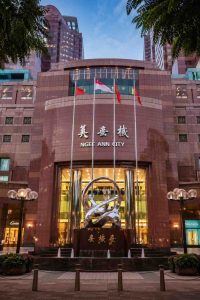
Ngee Ann City attracts serious shoppers with its premium retail experience. Takashimaya anchors the mall and offers one of Singapore’s best selections of Japanese cosmetics, homeware, and food. The basement food hall delivers a carefully curated experience with Japanese grocers, bakeries, and freshly prepared meals that locals actively seek out instead of treating it as just another mall food court.
Kinokuniya, occupying an entire level of the building, is one of the best English-language bookshops in Southeast Asia and worth a visit even if books are not on your list.
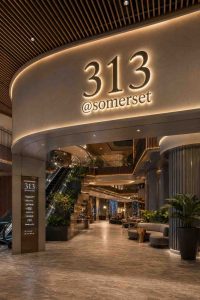
313@Somerset is the most practical stop on Orchard if you need mid-range international labels and a reliable meal.
The mall gets busy on weekends, but shoppers enjoy a thoughtfully selected mix of brands and better food options than most malls in the corridor.
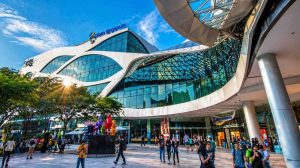
Plaza Singapura at the northern end of Orchard is particularly good for families. Uniqlo, LEGO, and a wide spread of dining options make it a comfortable place to spend a couple of hours without feeling like you need to spend a fortune.
When to visit: The Great Singapore Sale typically runs June through August, and November to December brings strong year-end discounts. If you are flexible on timing, these windows offer the best prices. Chinese New Year (January to February) is worth avoiding for smaller shops, as closures are common.
Marina Bay Sands: Where Luxury Shopping Becomes a Destination
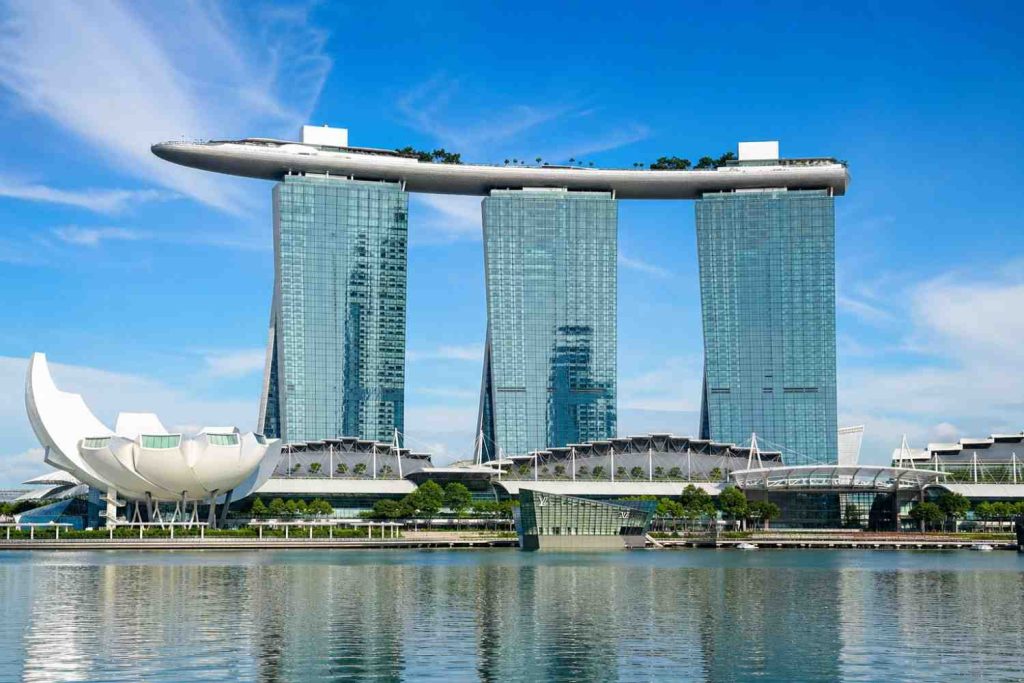
The Shoppes at Marina Bay Sands does something that most luxury malls do not manage: it justifies its own grandeur. The indoor canal running along the lower retail level, the gondola rides, the sheer scale of the place — it all adds up to something that feels genuinely different from wandering through a standard luxury corridor.
More than 170 boutiques are spread across the complex, including Singapore’s largest Louis Vuitton store, which alone is worth a look for the scale of the space. Hermès, Gucci, Dior, Cartier, Bottega Veneta, and most of the names you would expect at this level are all present, many in Southeast Asian flagship formats that stock broader ranges than their outposts elsewhere in the region.
There is also a high-end supermarket, a casino, and a cluster of restaurants that includes some of Singapore’s most celebrated chefs. You could arrive at noon, eat lunch, browse the shops, watch the gondolas, have dinner, and leave having spent a full day without stepping outside.
A practical note: Singapore’s GST Tourist Refund Scheme allows visitors to claim back the 9% Goods and Services Tax on purchases over SGD 100 from a single retailer. At Marina Bay Sands, where a single purchase can easily exceed that threshold, it is worth asking for the eTRS ticket at point of sale and processing the refund at Changi before departure. On a significant luxury purchase, the savings are real.
VivoCity: More Than Just a Gateway to Sentosa
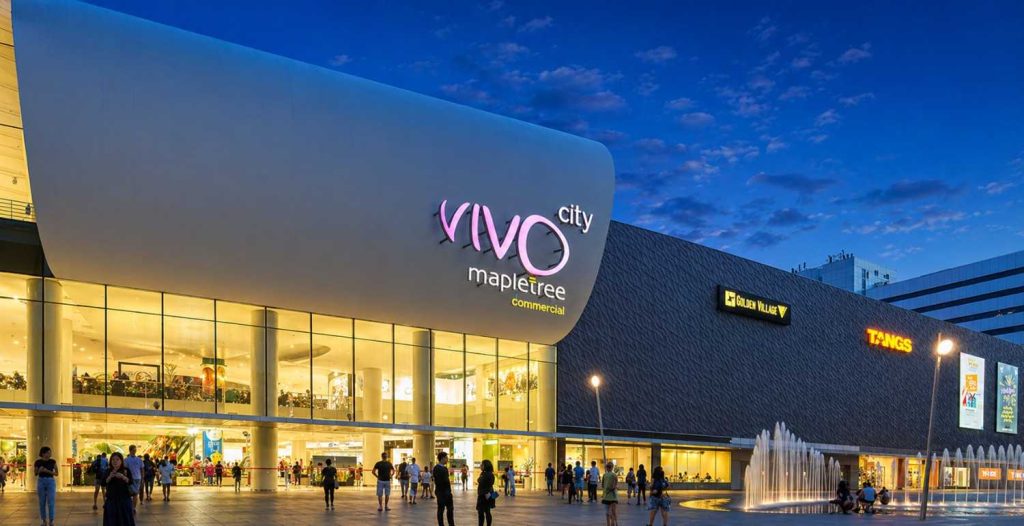
Singapore’s largest mall by floor space tends to get written off as a transit point for people heading to Sentosa Island. That is a mistake. VivoCity has over 300 shops and restaurants across three levels, and the mix — mid-range fashion, electronics, beauty, homeware, a large Cold Storage supermarket — makes it genuinely useful rather than just large.
The rooftop Sky Park on Level 3 is one of the more underrated spots in Singapore. Views stretch out over the Singapore Strait and across to Sentosa, and it is a pleasant place to sit down and not spend money for twenty minutes between shops. Food Republic on the same level offers the kind of hawker-style variety you associate with Singapore’s best food courts — a useful contrast to the upscale dining that dominates Marina Bay.
If Sentosa is on your itinerary, plan to spend two or three hours at VivoCity as part of the same trip rather than treating it as a separate visit. The Sentosa Express departs from Level 3 and the HarbourFront MRT is directly connected to the mall.
Jewel Changi: One of Asia’s Most Impressive Retail Spaces
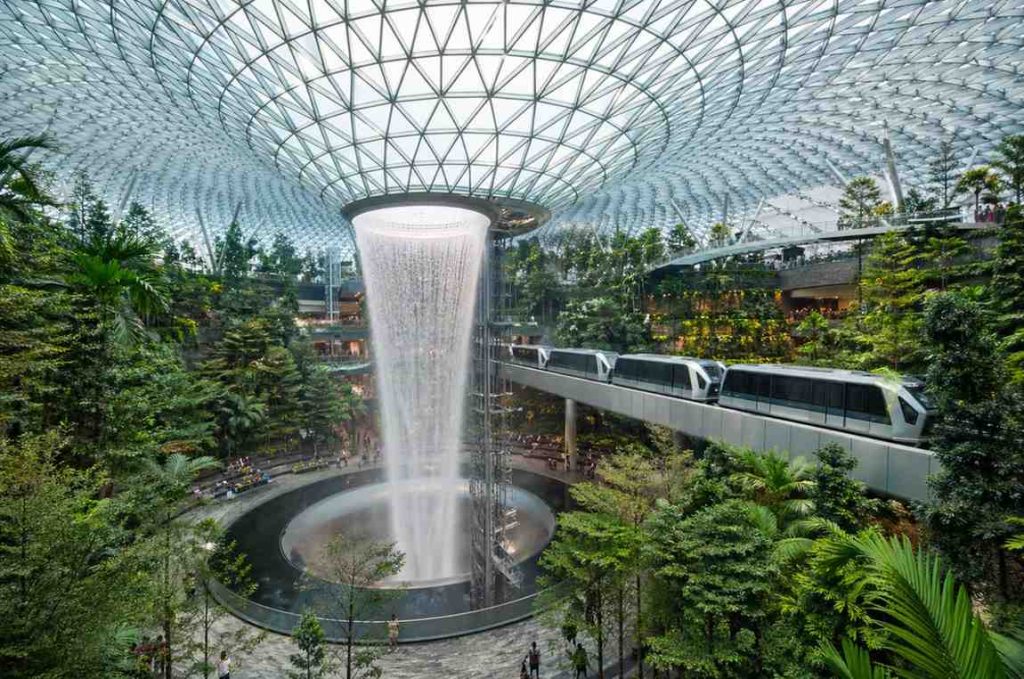
Calling Jewel Changi an airport mall feels inadequate and slightly absurd once you have stood beneath the Rain Vortex. The world’s tallest indoor waterfall — forty metres of cascading water inside a glass-and-steel dome — is the kind of thing you expect to see in architectural renderings, not in real life at an airport. It is spectacular.
The retail around it spans five floors and more than 280 stores. The focus here is not high fashion but accessible lifestyle brands, quality food, and a genuinely wide range of local products. Shake Shack, TWG Tea, A&W (a brand with deep nostalgic roots in Singapore), and a rotating selection of pop-up food concepts fill the dining spaces. For gifts and souvenirs — particularly food items like kaya, pineapple tarts, and bak kwa — Jewel has some of the best-curated selections available, all conveniently packaged for travel.
Level 5’s Canopy Park is free to walk through and offers raised garden paths and cloud fox trails above the dome. Additional attractions cost extra, but simply watching the waterfall and walking the park is worth the trip even if you are not flying. This is not a typical retail experience, and that is exactly the point.
Haji Lane and Kampong Glam: Singapore’s Independent Soul
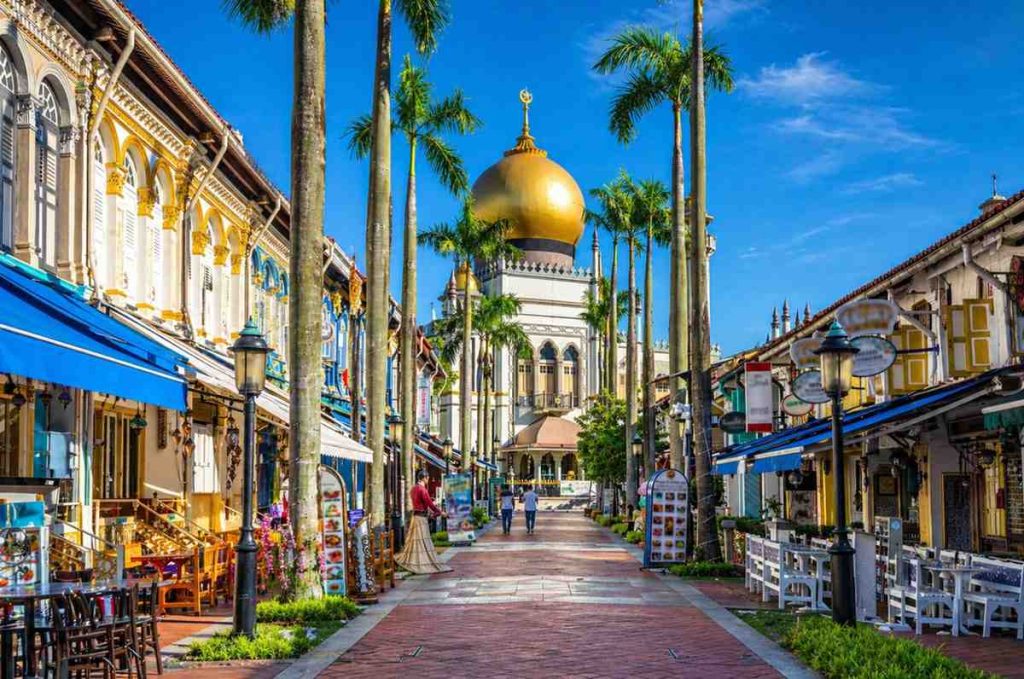
If you walk down Haji Lane for the first time expecting just another shopping street, you will be pleasantly disoriented. The lane is narrow, colourful, and crammed with small boutiques that feel like they belong to people, not corporations. Local designers sell handmade jewellery and original clothing out of spaces barely larger than a bedroom. Vintage stores sit next to galleries selling art prints. Curated lifestyle shops carry homeware and objects that you genuinely cannot find anywhere else in Singapore.
The surrounding streets amplify the experience. Arab Street has batik textile shops and rattan goods that have been here for generations. Sultan Gate has traditional Malay crafts and some of Singapore’s most atmospheric independent cafes tucked into shophouse interiors. The whole neighbourhood, officially known as Kampong Glam, preserves Singapore’s rich heritage and blends historic architecture with vibrant creative retail experiences that visitors can enjoy at a relaxed pace.
Weekend afternoons are the most lively. Weekday mornings offer the same shops without the crowds, which makes browsing more pleasant if you are easily distracted by people. Most shops open around 11am and stay open until 9 or 10pm.
This is also, factually, one of the most photogenic streets in Singapore. The murals, the painted facades, the tangle of shophouse balconies — allow more time than you think you need if you tend to stop for photographs.
Chinatown and Little India: Where to Find Something That Means Something
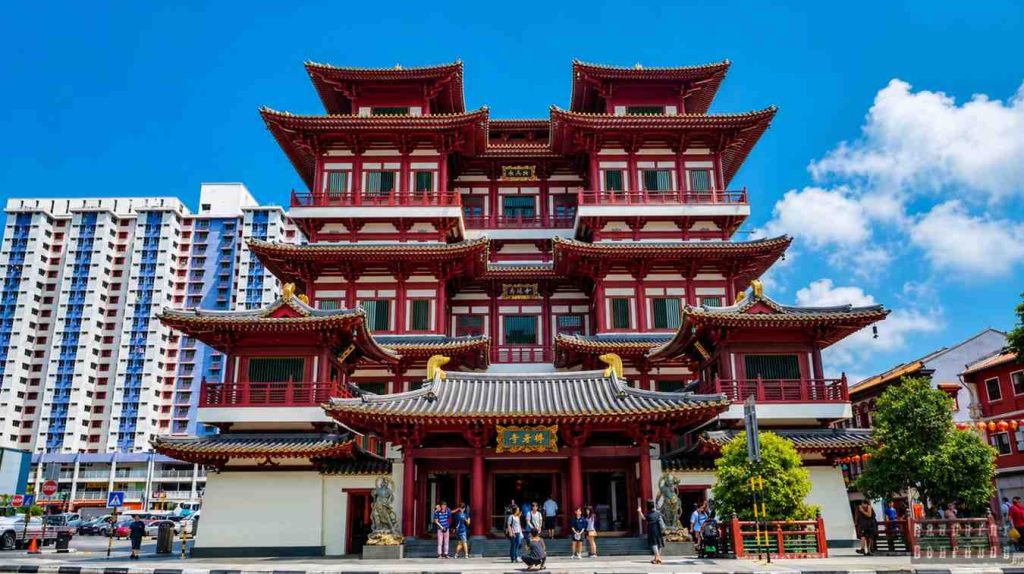
Airport souvenirs are fine. But if you want to bring home something that reflects where you actually were and what Singapore actually contains, Chinatown and Little India are where you go.
Chinatown’s Pagoda Street and Temple Street run dense with stalls selling jade jewellery, silk goods, Chinese herbal products, handmade crafts, and the kind of traditional decorative items that have been sold here for well over a century. Prices are negotiable at the street stalls — not aggressively, but politely and with reasonable expectation of a discount. The Chinatown Heritage Centre on Pagoda Street gives context to what you are looking at and is worth visiting before you shop rather than after.
For more unusual finds, the antique shops on Keong Saik Road and Neil Road are worth a slow browse. The quality and pricing varies considerably, but the browsing itself is enjoyable and occasionally turns up genuinely good pieces.
Little India, centred on Serangoon Road, is a different atmosphere entirely — louder, more fragrant, more vibrant. The shops here carry silk saris in colours that seem almost too intense to be real, handmade bangles, intricate gold jewellery, spices, and incense that you can smell from half a block away. Mustafa Centre — open 24 hours, every day — is an institution that defies easy description. It sells groceries, electronics, gold, clothing, luggage, and cosmetics across multiple floors at some of the most competitive prices in Singapore. It is chaotic in the best possible way, and locals swear by it.
During Deepavali, between October and November, Little India transforms entirely. Temporary stalls, elaborate light installations, and a genuine festival energy make it one of the most memorable shopping experiences in Singapore if your timing aligns.
Practical Tips That Will Actually Help You
Claim your GST refund. Singapore’s GST is 9% in 2026. Any purchase over SGD 100 from a single retailer qualifies for a tourist refund at Changi Airport. Ask for an eTRS ticket when you pay and process it before your flight. On larger purchases, this is a meaningful saving.
Use an EZ-Link card. Available at any MRT station for a small deposit, it covers all buses and trains across the city. Moving between Orchard Road, Marina Bay, Bugis, and Chinatown by MRT is faster than most people expect and far cheaper than taxis.
Haggle at markets, not in malls. Bargaining is expected and normal at street markets in Chinatown, Little India, and Bugis Street. Fixed prices apply at all mall and branded stores without exception.
Avoid Sim Lim Square for electronics. This is consistent advice from every honest source, local or otherwise. The tactics used on tourists at Sim Lim have been widely reported for years. For electronics, Funan Mall near City Hall is clean, transparent, sells products with valid warranties, and has professional customer service. It is worth the extra ten minutes of travel.
Time your visit for the sales. The Great Singapore Sale runs June through August. Year-end sales in November and December are equally strong. Outside these windows, malls offer fewer promotions but markets remain negotiable year-round.
How to Plan Your Time Depending on How Long You Have
One day: Start on Orchard Road in the morning — ION Orchard and Ngee Ann City cover the essentials. Take the MRT to Marina Bay Sands for lunch and a look at the luxury shops. Afternoon: head to Haji Lane for something completely different, or to Jewel Changi if you are departing that evening.
Two to three days: Add a half-day in Chinatown and Little India, an evening at VivoCity before or after Sentosa, and at least one unplanned walk through Tiong Bahru — a neighbourhood of 1930s public housing now filled with independent bookshops, coffee roasters, and small boutiques that most visitors miss entirely.
Longer: Wander. Singapore’s best shopping moments often come from turning down a street you did not plan to turn down and finding something you cannot explain how you found. Kampong Glam rewards that kind of wandering more than almost anywhere else in the city.
Final Thoughts
Singapore is not the cheapest place to shop in Southeast Asia. It is not the most chaotic, or the most atmospheric, or the most traditionally “Asian” in the way that phrase tends to be used in travel content. What it is, reliably, is good: well-organised, genuinely diverse in what it offers, and honest about what things cost.
The malls are among the best in the world. The markets are authentic rather than performed. And the neighbourhoods in between — Kampong Glam, Tiong Bahru, Chinatown’s quieter streets — contain a kind of retail culture that takes some searching to find and rewards you when you do.
The best things you will come home with from Singapore are usually not the ones you planned to buy.
Planning the wider trip? Our complete Singapore travel guide covers where to stay, eat and get around — and these carry-on packing hacks will help you get your haul home. More in our travel guides.
Sources & further reading
These are the primary references behind the guidance in this article: