How to Declutter Your Kitchen: What to Keep, Donate and Toss
A guilt-free framework for decluttering your kitchen: three questions that decide every item, what to toss immediately, what to donate, and the maybe-box trick with a deadline.
The hardest part of decluttering a kitchen is not the deciding. It is the guilt. The fondue set was a wedding gift. The juicer cost real money. The seventeen souvenir mugs each have a story. I know, because I have talked myself out of keeping all three categories, and my kitchen has been better for it ever since.
This guide gives you a decision framework so you are not relitigating every object from scratch. Set aside an afternoon, work one zone at a time, and let the rules do the arguing.
The three questions that decide everything
For every item, ask in order:
- Have I used this in the last twelve months? A full year covers every holiday, birthday and baking season you actually have
- If it broke today, would I buy this exact one again? If the answer is no, you already know it is not earning its space
- Is this the best one I own, or a backup? Keep the best. Backups are clutter wearing a safety vest
Anything that fails two of the three questions goes in the donate box. You do not need to feel sure. You need to feel done.
What to toss without a second thought
- Plastic containers with no matching lid, and lids with no matching container — pair them up once, then everything single gets recycled
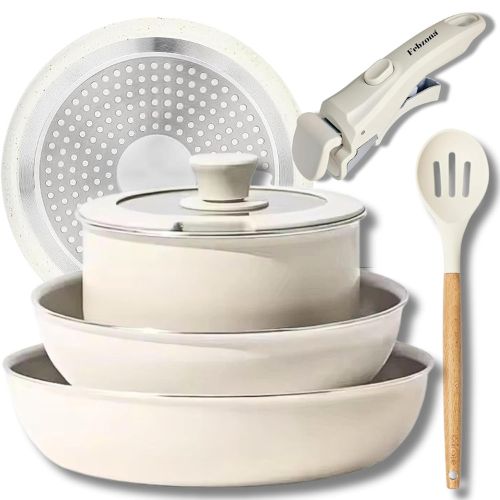
- Scratched non-stick pans — once the coating is damaged they are not safe to cook on, and no one wants them second-hand
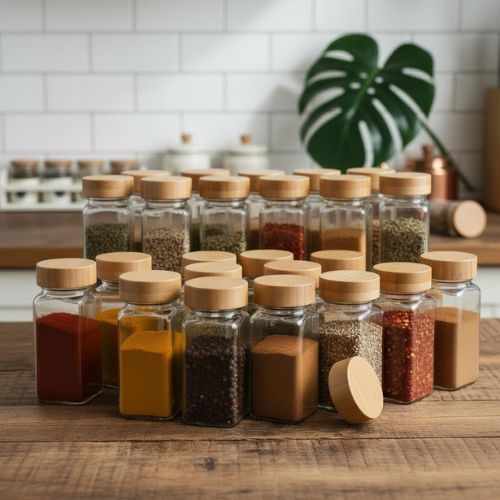
- Expired spices, sauces and baking supplies — ground spices older than about two years season nothing; they just add dust
- Chipped mugs and cracked glasses you avoid using anyway
- Appliance manuals for appliances you no longer own, and warranty cards that expired during a previous government
- Takeaway sauce packets, disposable chopsticks and the drawer sediment that accumulates around them
What to donate
Working duplicates, the bread maker you outgrew, the cake stand from a baking phase that ended, glassware sets you replaced. Charity shops sell kitchenware quickly, and knowing an appliance will actually get used makes it far easier to let go. If it has been in a “maybe” box for six months, it is a donation.
What to keep even though the internet says otherwise
Decluttering advice can get puritanical. Keep the turkey platter you use once a year — annual use is still use, it just belongs on a high shelf. Keep the good knives even if they intimidate you. Keep one genuinely silly item that makes you happy. My own version is a hedgehog-shaped cheese grater that has survived three purges on pure charm. A kitchen is allowed personality; it is just not allowed three vegetable peelers.
The maybe box, with a deadline
For items you truly cannot decide on: put them in a box, write a date three months out on the lid, and store it out of the kitchen. Anything you retrieve during those months has re-earned its place. When the date arrives, donate the box without reopening it. Reopening it restarts the argument you already won.
The five clutter hotspots, in the order to hit them
Kitchen clutter is not evenly distributed. It concentrates in five predictable places, and tackling them in this order builds momentum from easiest to hardest:
- The plastics cabinet — fastest win in the kitchen. Match containers to lids, recycle the singles, and you will reclaim a shelf in fifteen minutes
- The utensil drawer — tip it out, put back your genuine daily tools, and look hard at the rest. Three whisks is a collection, not a toolkit
- The pantry — expiry dates make decisions for you, which is why this comes early. Check the backs of shelves; that is where 2023 lives
- The gadget graveyard — the cabinet of single-purpose machines. Slowest zone because every item has a story and a price tag attached to its guilt
- The sentimental shelf — inherited china, wedding gifts, the mugs with history. Do this last, when your decision muscles are warmed up and you trust your own judgment
Where it all goes: donate, sell, recycle, bin
Half the resistance to decluttering is not knowing what happens to the stuff. A destination for each pile removes the excuse:
Donate anything clean and working: charity shops turn kitchenware over quickly, and local food banks and community kitchens sometimes take small appliances in good condition — ring first. Sell only things worth the friction; in practice that means working appliances over about £30 in value on your local marketplace, and almost nothing else. The £4 you might get for a used colander is not worth the doorstep meetup. Recycle metals and rigid plastics through your council stream, and note that scratched non-stick pans are usually accepted at metal recycling even though they cannot be donated. Bin the true junk — warped plastics, cracked wooden spoons, anything with rust where food goes.
Set a deadline for the sell pile: one week, listed and photographed, or it converts to donation. A sell pile without a deadline is just clutter with ambitions.
Keeping it decluttered: the one-in-one-out ledger
Decluttered kitchens refill themselves — through gifts, deals, and midnight purchases — unless an outflow matches the inflow. The simplest rule that survives real life is one-in-one-out: a new mug means a mug leaves, a new pan means the pan it beats goes in the donation box. I keep the donation box itself in the hall cupboard, always open. When it fills, it goes to the shop. The box being permanent is what makes the rule permanent.
Twice a year — I use the changes of the clocks as reminders — do a thirty-minute walkthrough of the five hotspots. That half hour, twice a year, is the entire maintenance cost of a kitchen that never again needs the big teardown.
Frequently asked questions
What if I declutter something and need it later?
It will happen once or twice, and it will cost you a few pounds to rebuy — measured against a permanently usable kitchen, that trade is spectacular. In practice the regret rate is far lower than the fear predicts: of the maybe-box items I have donated over the years, I can name exactly one I rebought. A garlic press. Life continued.
How do I declutter inherited or gifted items without guilt?
Separate the object from the relationship. The person gave you a gift, not a permanent storage obligation, and most givers would be horrified to learn their gift became a weight. Keep the pieces you genuinely use or love, photograph anything with memories attached, and let the rest go to a home that will use it. If a specific piece is hard, use the maybe box — a deadline decides more kindly than an afternoon of agonizing.
Should I declutter before or after reorganizing?
Before, always. Organizing first means building a system around objects that should not be there, then rebuilding it when you finally purge. Declutter, live with the reduced kitchen for a few days, then organize what remains — the full sequence is in my seven-step organizing guide.
After the purge
Decluttering is the demolition phase. The rebuild — deciding where everything lives so it stays organized — is covered step by step in how to organize your kitchen. If you are working with very little space, these small kitchen storage ideas will help you use what is left well. And before you rebuy anything you just donated, read my list of kitchen organization mistakes — buying storage before finishing the purge is mistake number one. All of it lives on our kitchen guides hub.
And a final word of encouragement, because decluttering advice can sound sterner than it should: you do not have to get this perfect. A kitchen that is eighty percent decluttered works about ninety-five percent as well as a flawless one, and it took half the effort. Do the plastics cabinet this weekend and see how it feels. Momentum, in my experience, does the rest — one cleared shelf has a way of making the next one irresistible, and by the third you are no longer following a guide, you are just finishing the job.
Sources & further reading
The recommendations here draw on the following independent sources: